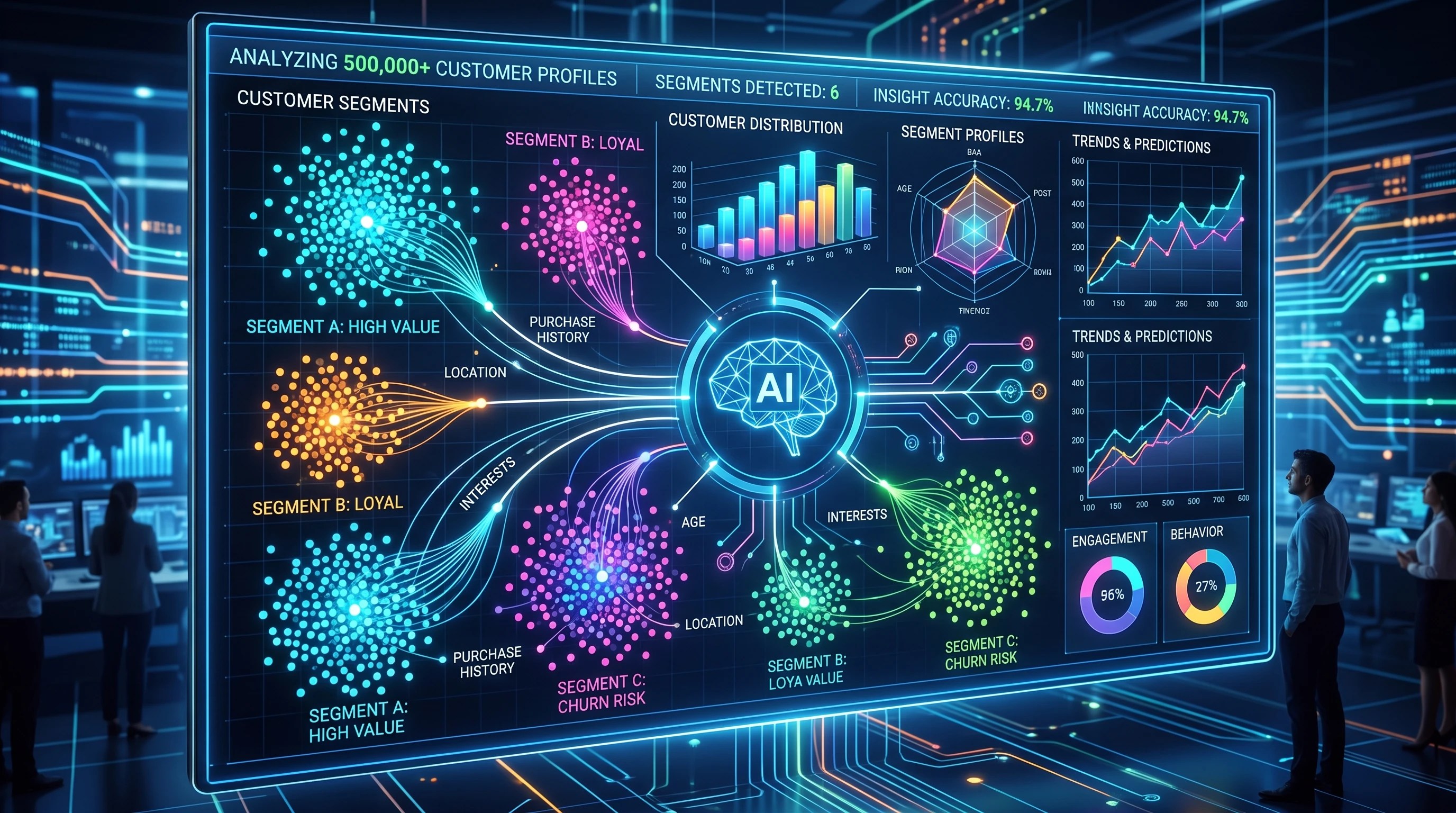
For anyone curious about how businesses get to know their customers better, AI-powered customer segmentation is a topic worth knowing. With today’s advanced tools, companies aren’t just guessing which customer belongs in which group; they’re now using AI to sort through mountains of data and get even smarter insights.
What is Customer Segmentation with AI?
Customer segmentation means breaking a big audience into smaller chunks based on things like buying habits, age, location, or preferences. AI helps automate and step up this process by analyzing tons of data super fast. Instead of just creating basic groups, AI can reveal patterns in customer behavior that traditional methods might miss. I’ve seen businesses get fresh insights just by switching from manual methods to AIpowered segmentation, leading to better results and smarter marketing strategies.
- Traditional Segmentation: Manual, uses simple data points (like age, gender, or location)
- AIpowered Segmentation: Automated, can process clicks, social media behavior, product views, and more
With smarter tools, brands can spot which customer groups are most likely to buy, respond to offers, or return to shop again. This means less guesswork and more action based on real patterns found in the data.
How AI Analyzes Customer Data
AI uses algorithms, basically step-by-step data “recipes,” to check out huge datasets and find patterns that humans might overlook. Many of these tools also use machine learning, so the more data they process, the better they get at noticing useful details about customer behavior.
- Collecting Data: AI starts by gathering customer data from website visits, purchase history, email interactions, customer service chats, and even social networks.
- Identifying Patterns: Next, AI checks out what similarities or differences exist between customers. Maybe one group always buys during sales, while another prefers grabbing new arrivals as soon as they drop.
- Grouping Customers: The end result is clear, databased segments that go beyond the basics. AI might group customers by their likelihood to respond to discounts, how much they spend, or what types of products they skip over.
What makes this method handy is that brands of any size can get specific, whether they have 500 or 50,000 customers, and adjust as new data comes in. It opens the door to better personalization and stronger campaigns, no matter the business size.
RealWorld Examples and Benefits
I’ve checked out retail brands using AI for segmentation with some eye-catching results. For instance, one online store targets ecofriendly shoppers with green product launches after AI tracks down their interests in sustainable goods. Another example is streaming services recommending new shows based on what similar users like, which keeps folks subscribed longer. There’s no onesizefitsall fix here. AI adapts to whatever data you feed it and gets better over time.
- More Personalization: Because groups are so specific, brands can send messages that really matter to the person getting them.
- Saves Time and Money: Instead of making guesses, marketers know exactly who’s likeliest to buy, so they can focus energy where it counts most.
- Better Customer Experience: Customers get recommendations they care about, not random offers they’ll ignore.
Using AI for segmentation often leads to more sales and happier customers, as campaigns are tailored to their interests instead of being boring or generic.
Getting Started With AI Customer Segmentation
Jumping into AI segmentation doesn’t mean you need to be a data scientist. Plenty of platforms (like Salesforce Einstein, HubSpot, or Google Analytics 4) offer readyto-use AI solutions for customer segmentation. These tools let you plug in your data and watch as helpful segments pop up, often in a few clicks.
- Centralize Your Data: Make sure all your data—website, email, purchase—lives in one place for clean and simple analysis.
- Test and Learn: Try fresh campaigns on different segments and see what hits the mark.
- Keep Improving: With each new batch of data, AI can keep tuning segments for even sharper results, so don’t stop updating your strategy.
It usually only takes a short while to see the benefits, and starting can be as simple as exploring features built right into the analytics platforms you already use. Even small tweaks in how you group and target customers often make a huge difference in results.
Share Your Experience
If you’ve tried AI for customer segmentation, your experience might help others just starting out. Drop a comment below with any tips or questions, especially if you’ve noticed a big difference in connecting with your customer groups or boosting campaign success.